
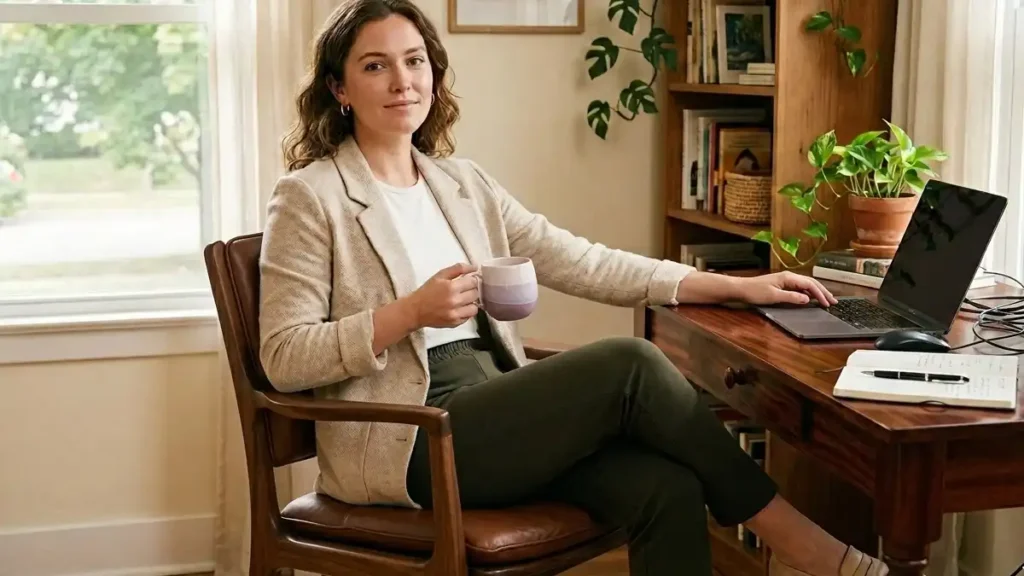
Your outfit can change the way your whole day feels before the first email even opens. Work from home looks are not about dressing up for no reason; they are about giving your body comfort and your mind a small signal that the day has started. That matters in a U.S. work culture where kitchen tables, spare bedrooms, and shared apartments now double as offices more often than anyone expected.
The best home outfits sit in the middle. Too stiff, and you spend the day tugging at collars. Too sloppy, and every video call feels like a surprise inspection. A soft knit top, clean joggers, a relaxed button-down, or a polished cardigan can give you that middle ground without making your morning harder.
Style also affects how others read you online. A neat neckline, good color, and balanced shape can make you look prepared even when your desk is three feet from the laundry basket. Brands, freelancers, and remote teams all know presentation still matters, which is why practical style advice from spaces like modern professional lifestyle resources feels more useful than old office dress codes.
Building Work From Home Looks That Feel Easy but Still Look Intentional
Comfort should never mean surrender. The strongest remote-day outfits work because they remove friction while keeping enough structure to make you feel present, alert, and ready to be seen.
Why soft structure beats stiff office clothing
A blazer can still work at home, but it should not feel like armor. Soft structure comes from pieces that hold shape without pressing into your body. Think ribbed cardigans, knit polo tops, relaxed trousers, cotton button-downs, and pull-on pants with a clean front.
This is where many people get remote dressing wrong. They copy their old office closet into a new setting, then wonder why they feel tense by lunch. A lined jacket, tight waistband, and hard shoes make sense for a downtown meeting. They make less sense when you are answering emails from a quiet corner of a Chicago apartment.
A better choice is a top layer that gives your shoulders shape without adding weight. A knit blazer, cropped cardigan, or structured overshirt can make comfortable office style feel natural instead of forced. You still look put together, but your body does not feel trapped.
How to dress for the camera without overdoing it
Video calls flatten outfits, so details near the face matter most. Necklines, collars, earrings, glasses, and color contrast do more work than shoes or belts. A clean crewneck sweater can look sharper on Zoom than a full outfit that reads muddy through a webcam.
Remote work outfits should also account for lighting. Black tops can look harsh in a dim room, while pale gray can wash you out against a white wall. Mid-tone colors such as olive, navy, clay, soft blue, and warm beige often look better on camera because they create shape without shouting.
The unexpected trick is to dress from the shoulders up first, then build down. Once your top half feels clear and balanced, the rest can stay relaxed. That is how you avoid the strange remote-worker split between a boardroom shirt and pajama pants that make you feel half-ready all day.
Choosing Fabrics That Keep You Comfortable Through Long Home Days
Fabric decides whether an outfit lasts past noon. A piece can look perfect in the mirror and still become useless if it traps heat, wrinkles fast, or feels scratchy after hours at a desk.
Natural blends that breathe during changing indoor temperatures
American homes are not all climate controlled in the same way. A person working in Phoenix deals with blasting air conditioning. Someone in Boston may sit near a drafty window in February. Fabric choice has to match the room, not the old office rulebook.
Cotton blends, modal, bamboo, lightweight wool, and soft jersey give you comfort without collapsing into sleepwear. These fabrics move with you, breathe better than cheap polyester, and hold enough polish for casual professional outfits. They also layer well, which matters when your morning starts cold and your afternoon sun turns the room warm.
A cotton tee under a fine cardigan can beat a bulky sweatshirt because it adapts. You can remove the layer, keep the outfit intact, and still feel dressed. That small flexibility saves more energy than people think.
Why wrinkle resistance matters more at home
Wrinkles show up fast when you sit for hours. Linen pants may look beautiful at breakfast, then look defeated by your 1 p.m. check-in. That does not mean you must avoid relaxed fabrics, but you should know how they behave before choosing them for a full workday.
Comfortable office style often depends on fabrics with recovery. Ponte knit pants, ribbed tops, washable knits, and cotton blends with a touch of stretch keep their shape after sitting. They help you stand up for a call without looking like the chair won.
There is also a mood factor here. Clothes that wrinkle, twist, or cling make you adjust yourself all day. That constant fixing drains focus. A good home outfit almost disappears while still making you look ready when the camera turns on.
Creating a Personal Remote Wardrobe That Saves Time
A strong remote wardrobe does not need dozens of pieces. It needs repeatable combinations that remove morning decisions and still give you enough variety to avoid feeling stuck.
Build outfit formulas instead of chasing trends
Trends can help, but formulas save the day. A formula might be a fitted knit top with wide-leg pull-on pants, a soft button-down with straight-leg jeans, or a matching lounge set upgraded with a cardigan. Once the formula works, you can repeat it in different colors.
This approach is practical for anyone balancing meetings, errands, and home tasks in the same day. A Dallas marketing manager may need to join a client call at 10, pick up groceries at 12, and finish reports by 4. The right formula moves through all of that without demanding a full outfit change.
Casual professional outfits work best when each piece has a job. One item gives polish, one gives comfort, and one gives personality. That could mean clean joggers, a tucked knit tee, and small gold hoops. Simple, but not careless.
Keep a few camera-ready pieces within reach
Some days go sideways. A last-minute call appears. A client turns video on. Your team decides a quick chat should become a full meeting. A small set of camera-ready pieces can rescue you without panic.
Keep one polished cardigan, one structured overshirt, and one clean top in easy reach. These pieces should match most of your home clothes. Navy, cream, charcoal, olive, and camel often work because they pair well with denim, black pants, leggings, and soft trousers.
Zoom meeting attire does not have to be formal. It has to be intentional within the frame. A plain tank under a cardigan can look better than a wrinkled blouse. A neat neckline and tidy hair can do more than a full suit when the screen only shows your upper body.
Styling Details That Make Comfort Look More Polished
Small choices carry more weight when the outfit itself is relaxed. Fit, grooming, color, and accessories decide whether home clothes look stylish or unfinished.
Use color to create a cleaner visual line
Color can make a simple outfit look planned. Matching tones, soft contrast, or one strong accent can turn basic clothes into something that feels styled. A cream sweater with tan pants feels calm. A navy top with dark denim feels focused. A burgundy cardigan over a white tee feels warm without being loud.
Remote work outfits benefit from color discipline because cameras already add visual noise. Busy prints can flicker on screen. Neon shades can reflect strangely on skin. A controlled palette helps you look clearer, which matters during interviews, client calls, and team presentations.
One counterintuitive move is to avoid wearing your favorite color if it looks poor on camera. The best outfit is not always the one you love most in person. It is the one that helps your face look alive, your posture look open, and your presence feel steady.
Add one polished detail before you start work
A single detail can shift the whole outfit. Small hoops, a watch, a smooth bun, clean sneakers, or a simple belt can pull relaxed clothing into a more finished place. You do not need five accessories. One good choice often works harder.
Comfortable office style becomes easier when you build a pre-work ritual. Put on the outfit, add one detail, clear the neckline, and check the mirror once. Then stop fussing. The goal is not perfection; it is a clean start.
This matters most for people who struggle to separate work time from personal time. Clothing can act like a soft boundary. You are still at home, but you are not drifting through the day. You have entered work mode in a way your body understands.
Conclusion
The future of professional style is not going back to stiff clothes and daily commutes for everyone. It is learning how to look capable in spaces that were never designed to be offices. That shift demands a smarter closet, not a bigger one.
Work from home looks should help you move, think, speak, and show up without feeling dressed for someone else’s life. The right outfit gives you comfort, but it also gives your day a shape. That shape matters when your office has no lobby, no commute, and no clear line between morning coffee and the first deadline.
Start with pieces that breathe, hold their shape, and look clean on camera. Build a few formulas you trust. Keep your colors simple and your details intentional. Then let the outfit do what good style always does: support the person wearing it.
Choose one remote outfit formula this week and make it your new default for focused, comfortable workdays.
Frequently Asked Questions
What are the best remote work outfits for daily comfort?
Soft trousers, knit tops, relaxed button-downs, cardigans, and clean joggers work well for daily comfort. Choose pieces that stretch, breathe, and hold shape after sitting. The best outfits feel relaxed but still look neat enough for an unexpected video call.
How can I make comfortable office style look professional at home?
Start with one structured piece, such as a cardigan, overshirt, or knit blazer. Pair it with softer basics that fit well. Clean colors, smooth fabrics, and small accessories can make a relaxed outfit look professional without making it feel stiff.
What should I wear for Zoom meeting attire?
Wear a clean top with a strong neckline, camera-friendly color, and minimal pattern. Add simple earrings, glasses, or a neat layer if needed. Your upper half matters most on video, so focus on the area around your face and shoulders.
Are casual professional outfits okay for remote jobs?
Yes, casual professional outfits are often ideal for remote jobs. They help you stay comfortable while still looking prepared. The key is balance: avoid sleepwear, choose clean shapes, and keep one polished layer nearby for meetings.
What colors look best for working from home video calls?
Mid-tone colors usually work well on camera. Navy, olive, soft blue, camel, burgundy, and warm beige create clear contrast without looking harsh. Avoid colors that wash you out, blend into your wall, or create glare under indoor lighting.
Can leggings look polished for a home office day?
Leggings can look polished when paired with a longer structured top, cardigan, or neat pullover. Choose thicker fabric that does not look sheer or worn. Keep the rest of the outfit clean, and avoid pairing leggings with overly casual sleepwear pieces.
How many outfits do I need for a remote work wardrobe?
You can start with five to seven strong outfit formulas. Rotate tops, layers, and bottoms in matching colors so pieces work together. A smaller wardrobe saves time when each item fits well, feels good, and suits your normal workday.
What fabrics are best for all-day home office comfort?
Cotton blends, modal, bamboo, jersey, ponte knit, and lightweight wool blends are strong choices. They breathe, move well, and keep their shape better than flimsy fabrics. Pick materials that feel soft after hours of sitting, typing, and moving around.