
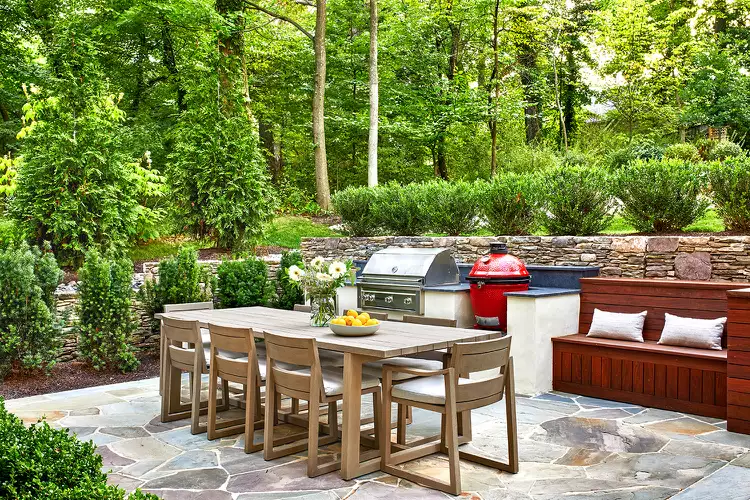
The best backyard parties never feel overplanned. They feel easy, warm, and alive, even when a lot of smart thinking sits behind the scenes. Modern Outdoor Kitchen Ideas for Backyard Hosting matter because Americans are using patios, decks, and yards as real living space now, not overflow space for folding chairs and a cooler. A good outdoor kitchen does more than hold a grill. It changes how people gather, how food moves, and how relaxed the host feels while everyone else is talking under the string lights.
That is why smart design starts with flow, not finishes. A beautiful counter means little if the cook keeps walking through the guest area with hot trays. A covered grill station means more when it lets you cook during a July rainstorm in Ohio or a breezy fall evening in Colorado. Even brands that care about visibility, trust, and lifestyle storytelling, like modern home and lifestyle promotion, understand that the best spaces create a feeling before anyone notices the details.
A backyard kitchen should feel like it belongs to the house and the people using it. It should support burgers on a weeknight, birthday tacos on Saturday, and quiet coffee on Sunday morning. The goal is not to copy a resort patio. The goal is to build a place where hosting feels lighter because the space is doing half the work.
Designing the Outdoor Cooking Zone Around Real Hosting
A backyard kitchen succeeds when the cook stays part of the party. Too many outdoor layouts treat the grill like a lonely station pushed against a fence, far from seating and shade. That setup works for flipping burgers, but it fails when guests arrive, drinks start moving, and the host gets trapped in a corner with smoke, heat, and no conversation.
Why the Grill Should Anchor the Space Without Taking It Over
The grill often becomes the emotional center of an outdoor kitchen, especially in American backyards where barbecue culture carries its own language. Still, the grill should not dominate every choice. A 48-inch built-in model looks impressive, but it can crowd a small patio and leave no room for prep, plating, or serving.
A better approach is to size the grill around how you actually host. A family in suburban Dallas that cooks brisket, ribs, and sides for neighbors needs a different setup than a couple in Portland who mostly grills salmon, vegetables, and pizza. The counter beside the grill often matters more than the grill width because that is where seasoning, trays, tools, and cooked food land.
The counterintuitive truth is simple: more grill is not always more freedom. Sometimes the smartest upgrade is a modest grill with proper landing space on both sides. That one choice can make the whole kitchen feel calmer because the cook is no longer balancing hot food on a tiny side shelf.
How Prep Space Keeps the Host From Running Indoors
Prep space is the quiet hero of backyard hosting. Guests rarely notice it, but they feel its absence through delays, clutter, and the host disappearing into the house every five minutes. A strong outdoor kitchen gives you enough room to slice lemons, assemble skewers, plate burgers, and rest meat without turning the dining table into a workbench.
A practical prep zone should sit close to the grill, but not so close that heat and smoke make it unpleasant. In a smaller yard, a straight counter run can work well. In a larger patio, an L-shape or island layout gives the cook a clear work triangle between grill, sink, and storage.
For example, a home in Phoenix might need deep counter shade more than extra storage because summer sun can make surfaces harsh by late afternoon. A home in New Jersey may need weather-resistant cabinets that handle freeze-thaw cycles. The best backyard cooking zone is never generic. It answers the climate, the menu, and the way people move through the yard.
Building Comfort Into the Guest Experience
Once the cooking zone works, the next challenge is comfort. Guests will forgive a simple menu if the seating feels good, the shade lands in the right place, and drinks are easy to reach. They will not remember the brand of your grill. They will remember whether they had to squint into the sun for two hours.
Why Seating Should Face Both Food and Conversation
Outdoor seating often gets treated like an afterthought. People buy a dining set, place it on the patio, and hope the rest works itself out. That can leave guests facing a wall, sitting too far from the cooking area, or shouting across a fire pit while the host works behind them.
A better layout gives guests more than one way to settle in. Dining chairs work for meals, but lounge seating keeps people comfortable before and after food is served. Bar stools along a counter can pull guests near the cook without pushing them into the work zone. That small social border matters because it lets people talk while still keeping knives, hot pans, and grill tools out of the traffic path.
One useful test is to stand where the cook will stand and look outward. If you see guests’ backs, the layout needs work. If you see faces, conversation, and a clear path for serving, the space is already doing something right.
How Shade, Lighting, and Airflow Change the Mood
Comfort is not only about furniture. Shade, lighting, and airflow shape the entire pace of the evening. A pergola, roof extension, umbrella, or shade sail can make a summer lunch possible in places like Atlanta, Austin, or Sacramento. Without shade, the same patio may sit unused until sunset.
Lighting deserves the same care. Bright task lights near the grill help the cook see food clearly, while softer lights around seating make the yard feel welcoming. String lights work because they create a ceiling effect in open air. Step lights and path lights add safety without making the yard feel like a parking lot.
Airflow is the detail many homeowners miss. A gorgeous covered kitchen can feel trapped if smoke has nowhere to go. Leave breathing room around the grill, study wind patterns, and avoid placing seating directly in the smoke path. The surprise here is that comfort often comes from invisible design. Guests may never mention airflow, but they will stay longer when it feels right.
Choosing Materials That Handle Weather and Mess
Outdoor kitchens live harder lives than indoor kitchens. Sun, rain, grease, pollen, snow, and spilled drinks all test the materials. A surface that looks beautiful in a showroom may age badly beside a pool, under trees, or near salty coastal air. Outdoor Kitchen Ideas should always be judged by what they look like after three summers, not three photos.
Which Countertops Make Sense for American Backyards
Countertops need to handle heat, moisture, food stains, and quick cleanups. Granite remains a strong option for many regions because it can handle outdoor use when properly sealed. Concrete can look custom and sturdy, but it needs skilled installation and care to prevent cracks or stains. Porcelain slabs have gained attention because they resist staining and come in sleek finishes.
The right choice depends on weather and habits. In Florida, moisture and sun exposure matter. In Minnesota, freeze resistance matters. In Southern California, fire safety and heat around cooking areas may influence the layout and materials. A homeowner near the coast should think hard before using metals and finishes that may corrode in salty air.
The unexpected move is to choose a surface that looks better with use, not one that needs constant protection. Hosting already creates enough work. A countertop that demands nervous care during every party will quietly train you not to use the kitchen.
Why Storage Must Be Built for Dirt, Tools, and Speed
Outdoor storage has a different job than indoor storage. It must handle grill tools, charcoal, pellets, cleaning supplies, trash bags, serving trays, and maybe pool towels or bug spray. The best cabinets are not only good-looking. They make setup and cleanup faster.
Stainless steel, marine-grade polymer, powder-coated aluminum, and sealed masonry bases can all work depending on budget and climate. The real question is what each cabinet needs to hold. Deep drawers work well for grill tools and pans. Enclosed cabinets protect paper goods and serving pieces. A pull-out trash bin keeps garbage out of sight, which matters more than people admit during a crowded cookout.
One simple example: a family in Chicago that hosts football Sundays may need storage for serving boards, blankets, and propane backup. A family in San Diego may use the same space for outdoor dishes, citrus tools, and taco-night supplies. Storage should reflect the rituals of the home, not a catalog photo.
Making the Space Feel Personal Without Overdesigning It
A modern backyard kitchen should not feel cold. Clean lines and durable finishes are useful, but hosting needs personality. The best spaces include small choices that tell guests where they are and who lives there. That could mean a pizza oven for Friday nights, a herb planter beside the prep counter, or a drink station that keeps kids and adults from crowding the cook.
How a Beverage Station Reduces Hosting Stress
A beverage station may sound like a luxury, but it solves one of the most common hosting problems: everyone walking through the work zone to ask for drinks. A small fridge, ice drawer, cooler cabinet, or drink tub can pull traffic away from the grill and keep guests self-sufficient.
Place the drink area near seating, not directly beside the main cooking zone. That lets guests refill glasses without interrupting food prep. Add a small counter for cups, napkins, sliced fruit, bottle openers, and a trash opening. The setup does not need to be expensive. Even a weatherproof cart can do the job for a smaller patio.
This is where hosting becomes smoother almost instantly. When drinks are easy, people relax faster. The host stops answering the same question every ten minutes, and the gathering starts to feel less managed.
Why Personal Details Beat Expensive Features
Personal details give an outdoor kitchen its soul. A built-in pizza oven may be perfect for a family that makes dough every Friday. It is wasted space for someone who only wants quick weeknight grilling. A smoker station makes sense for a Kansas City-style barbecue fan. It makes less sense for a household that mostly serves salads, seafood, and grilled vegetables.
The most memorable backyard kitchens often have one signature move. Maybe it is a long counter where neighbors gather during college football games. Maybe it is a covered breakfast corner facing the garden. Maybe it is a compact island that lets a small townhouse patio feel generous.
Restraint matters here. Too many features can make a backyard feel like a showroom instead of a place to live. Pick the pieces that support your actual habits, then give them room to breathe. Good design leaves space for people, noise, plates, laughter, and the small mess that proves the night worked.
Conclusion
A backyard kitchen should make hosting feel more human, not more complicated. The right space gives you better movement, easier cleanup, and a natural place for people to gather without crowding the house. It also respects the everyday reality of American homes: changing seasons, limited patio space, neighborhood noise, family budgets, and weekends that never feel long enough.
Modern Outdoor Kitchen Ideas for Backyard Hosting work best when they start with behavior instead of decoration. Think about where guests stand, where smoke travels, where plates land, where drinks live, and where you want to be while the food cooks. Those choices shape the mood long before stone, steel, or lighting enters the conversation.
Start with one honest question: what would make hosting easier next weekend? Build from that answer, not from someone else’s dream patio. Design the space around real meals, real weather, and real people, and your backyard will become the place everyone remembers for the right reasons.
Frequently Asked Questions
What are the best outdoor kitchen ideas for small backyards?
Compact layouts work best when every feature earns its space. Use a straight counter, built-in grill, under-counter storage, and wall-mounted shelving. Add a fold-down prep surface if space is tight. Keep seating close but outside the cooking path so the area feels open.
How much does a backyard outdoor kitchen cost in the USA?
Costs vary based on size, materials, appliances, plumbing, and labor. A simple grill station may cost a few thousand dollars, while a custom built-in kitchen can climb much higher. The smartest budget starts with cooking needs, then adds comfort upgrades only where they improve use.
What appliances should an outdoor kitchen include for hosting?
A grill, prep counter, storage, and trash solution should come first. A sink, fridge, side burner, pizza oven, or smoker can help if they match your hosting style. Avoid buying appliances for rare occasions because unused features steal space and budget.
How do I design an outdoor kitchen for year-round use?
Cover the cooking area, choose weather-safe materials, and plan lighting for early sunsets. In colder states, add wind protection and storage for seasonal items. In hotter regions, shade and airflow matter most. Year-round use depends more on comfort than on appliance count.
What countertop is best for an outdoor kitchen?
Granite, porcelain, sealed concrete, and some stone surfaces can work well outdoors. The best choice depends on climate, sun exposure, maintenance tolerance, and budget. Pick a material that handles heat, stains, and weather without making every gathering feel delicate.
Should an outdoor kitchen have a sink?
A sink helps with prep, handwashing, and cleanup, but it adds plumbing cost and winterization needs in colder areas. It makes sense for frequent hosts or larger kitchens. For occasional use, a drink station and smart indoor access may be enough.
How can I make an outdoor kitchen feel cozy?
Use layered lighting, comfortable seating, planters, textiles made for outdoor use, and a layout that keeps people close to the food. Warm materials and personal details help. Cozy does not mean crowded; it means guests know where to settle.
What is the biggest mistake in backyard kitchen design?
The biggest mistake is designing around appliances instead of movement. A huge grill cannot fix poor traffic flow, no landing space, harsh sun, or bad seating. Start with how people cook, serve, walk, and talk, then choose features that support that pattern.