
Most rooms do not feel unfinished because the sofa is wrong or the wall color is dull. They feel unfinished because nobody looked up. Ceiling design tips matter because the ceiling controls scale, light, mood, and the way a room settles around you. In many American homes, from compact condos in Chicago to open-plan houses in Texas, the ceiling is the largest blank surface nobody treats with enough care. That blankness can make good furniture look weaker than it should. A flat white ceiling is not always a mistake, but it should be a choice, not the default setting you inherit from the builder. Smart homeowners, decorators, and content teams at home improvement publishing platforms know one quiet truth: the best room often wins from above. A ceiling can make a bedroom feel calmer, a kitchen feel taller, or a living room feel more finished without crowding the floor. The trick is not adding drama everywhere. The trick is knowing when the ceiling should speak, when it should whisper, and when it should let the rest of the room breathe.
Ceiling Design Tips That Start With Room Proportion
A ceiling should never be designed in isolation. It has to answer the room below it. A 9-foot ceiling in a suburban Atlanta living room needs a different move than an 8-foot ceiling in a Boston apartment or a vaulted ceiling in an Arizona family room. The mistake many homeowners make is chasing a photo instead of reading the room first.
How can ceiling height change the whole room mood?
Low ceilings need restraint, not neglect. A room with an 8-foot ceiling can still feel polished, but heavy beams, dark paint, and bulky trim can press the space down fast. A better move is to use clean lines, soft contrast, and lighting that pulls the eye across the room instead of forcing it upward.
Many older American homes have modest ceiling heights, especially ranch houses and post-war homes. In those spaces, a smooth ceiling with a subtle satin finish can bounce light better than textured plaster. Add slim crown molding only when the wall height can handle it. Trim that looks rich in a catalog can look bossy in a small den.
Tall ceilings bring a different problem. They can feel cold if the room below them has no visual weight. A 12-foot living room with plain white walls and a bare ceiling may technically feel open, but it can also feel unfinished. Painted beams, shallow coffers, or a warmer ceiling tone can bring the room back to human scale.
Why should ceiling shape match the furniture layout?
Furniture tells you where the ceiling should focus. A tray ceiling over a dining table makes sense because the table already creates a center. A coffered pattern over a sectional can work if the grid respects the seating zone. Random ceiling detail, though, creates visual noise.
Think about a family room in a newer Florida home. The sofa faces a media wall, the kitchen opens behind it, and the ceiling spans both zones. A single ceiling treatment across the whole space can blur the room’s purpose. A modest beam line or recessed panel above the seating area can quietly separate the space without adding a wall.
Ceiling design works best when it supports how people actually live. If kids sprawl on the floor, guests gather near the island, and the dining table doubles as a homework station, the ceiling should help those zones feel clear. Good design is not decoration pasted overhead. It is a map of how the room works.
Using Color and Texture Without Making the Ceiling Heavy
A ceiling does not need loud detail to feel designed. Color, texture, and finish can shift the whole room with less cost than major carpentry. The risk is going too far because ceilings punish overconfidence. What looks rich on a sample board can feel overwhelming across 200 square feet.
What ceiling paint colors work best for stylish ceiling ideas?
White still has a place, but it should not be the only answer. Warm white can soften a bedroom. Pale greige can calm a living room with too much daylight. Soft blue can make a porch ceiling feel cooler, which is why many Southern homes have used blue porch ceilings for generations.
A color-wrapped room can look rich when the ceiling matches the walls. This works well in small powder rooms, cozy offices, and bedrooms where you want a cocoon effect. The counterintuitive part is that matching the ceiling to the walls can make a low room feel less chopped up, not smaller. The eye stops measuring where the wall ends.
Dark ceilings need a clear reason. A charcoal ceiling in a media room can reduce glare and create a theater feel. The same color in a small kitchen with one window may feel gloomy by breakfast. Paint is cheaper than carpentry, but it still changes the emotional temperature of the room.
How do wood, plaster, and panels affect room ceiling styles?
Texture gives a ceiling memory. Smooth drywall feels clean and quiet. Wood planks feel warmer and more relaxed. Limewash or plaster can make a ceiling feel handmade without looking old-fashioned. Each material sends a different message before anyone notices the furniture.
Wood works well in American homes that need warmth, especially open layouts with pale floors and white walls. A white oak ceiling panel above a kitchen island can make the space feel grounded. Painted beadboard can also rescue a plain cottage bedroom or coastal mudroom without turning it into a theme park.
Panels require care. Large grids can make a room feel formal, while narrow planks can make it feel casual. A ceiling should not fight the floor. If the floor already has strong grain, a busy wood ceiling may compete with it. Quiet contrast usually wins.
Lighting Plans That Make the Ceiling Earn Its Place
Lighting is where many ceiling choices either shine or fall apart. A beautiful ceiling with poor lighting looks flat at night. A simple ceiling with thoughtful lighting can feel expensive after sunset. The ceiling is not only a surface. It is the room’s lighting stage.
Why do ceiling lighting ideas need layers instead of one fixture?
One fixture rarely serves a whole room well. A central chandelier can look pretty, but it may leave corners dim and faces shadowed. Recessed lights can brighten a room, but too many can make the ceiling look like an airport runway. Layered light solves what one source cannot.
A strong plan often includes ambient light, task light, and accent light. In a kitchen, recessed lights may handle movement, pendants may serve the island, and under-cabinet strips may help with prep. In a bedroom, a flush mount can provide general light while wall sconces keep the nightstand clear.
The best ceiling lighting ideas begin with activities, not fixtures. Reading, cooking, hosting, cleaning, watching TV, and relaxing all need different light. That is why dimmers matter so much in U.S. homes. They let one room change jobs without changing its design.
How can recessed lights and statement fixtures work together?
Recessed lights should support the room, not pepper the ceiling without mercy. A few well-placed cans can wash a wall, brighten a path, or support a seating area. Too many make the ceiling feel busy and cheap, even when the fixtures are expensive.
Statement fixtures need breathing room. A sculptural chandelier above a dining table can carry the room, but it should not compete with a heavy ceiling grid. A simple tray ceiling can frame a chandelier beautifully because both elements share the same center. That pairing feels intentional.
Scale matters more than price. A small fixture over a large table looks timid. A huge pendant in a narrow hallway feels like a mistake you have to duck around. Before buying the fixture, tape its rough diameter on the floor below. If it feels wrong underfoot, it will feel wrong overhead.
Architectural Details That Add Style Without Stealing Space
Ceiling architecture can give a room character without using a single inch of floor area. That makes it useful in smaller American homes, city apartments, and busy family spaces. Still, detail must be edited. A ceiling can turn from stylish to fussy in one extra layer.
When do beams, trays, and coffers make sense?
Beams work when they look connected to the home’s structure or style. In a mountain house, exposed wood beams feel natural. In a plain suburban dining room, fake rustic beams can look staged if nothing else in the house supports them. The ceiling should not wear a costume.
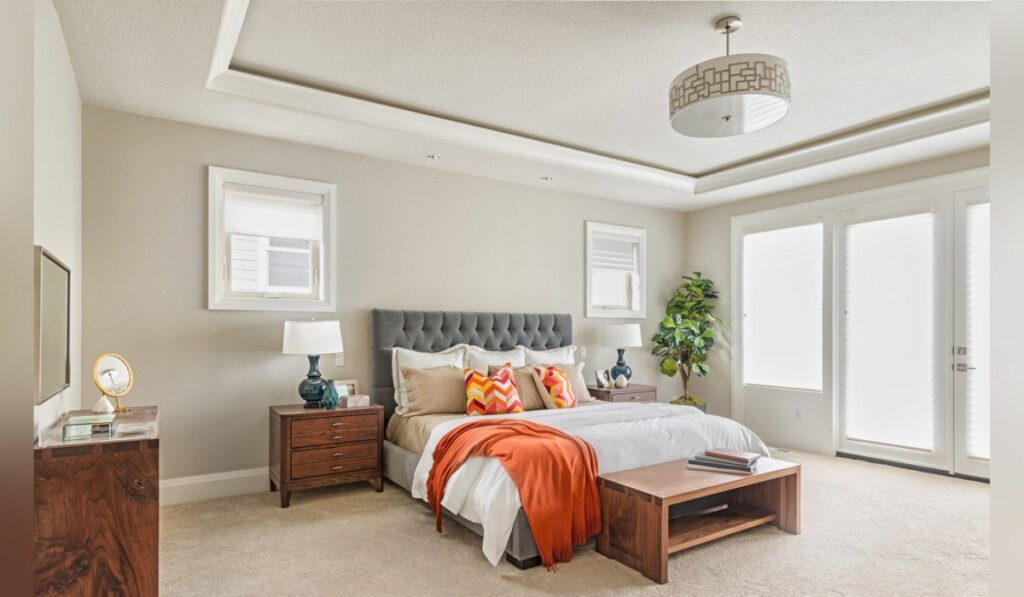
Tray ceilings can add depth without much visual weight. They work well in primary bedrooms, dining rooms, and sitting areas where you want a softer focal point. A shallow tray with hidden lighting can feel calm and grown-up. Add too many trim layers, and it starts to feel like a wedding venue.
Coffered ceilings are strongest in rooms with enough height and order. A home office, library, or formal living room can handle that rhythm. In a low family room filled with casual furniture, coffers may feel stiff. The unexpected rule is simple: the more relaxed the room, the quieter the ceiling detail should be.
How can modern room interiors stay clean with ceiling detail?
Modern room interiors do not reject detail. They reject clutter. A clean ceiling can still have shadow lines, recessed edges, slim beams, or soft curves. The difference is discipline. Every line needs a reason.
Curved ceiling details are gaining attention because they soften boxy rooms. A shallow arch between a kitchen and dining area can feel warmer than a hard rectangular opening. Rounded soffits can also hide ductwork while making the ceiling feel planned instead of patched. That is a clever move in remodels where mechanical systems limit your options.
Modern room interiors also benefit from negative space. You do not need to treat every ceiling surface. Sometimes one framed zone above the dining table does more than a full-room treatment. Leave part of the ceiling plain, and the designed area looks sharper.
Conclusion
A ceiling is easy to ignore because it does not demand daily contact. You do not sit on it, walk across it, or open it like a cabinet. Still, it shapes almost every moment in the room. It controls how tall the space feels, how light moves, and whether the design feels finished or slightly off.
The smartest ceiling design tips are not about chasing luxury. They are about making better decisions before money gets spent. Read the room height. Respect the furniture layout. Choose color with restraint. Treat lighting as part of the architecture, not an afterthought. Add detail only where it earns attention.
For most homeowners, the best move is to improve one ceiling first. Pick the room where people gather most or the bedroom where you need peace at the end of the day. Look up, study what the space is missing, then choose one change that makes the whole room feel more resolved. A stylish room does not stop at eye level.
Frequently Asked Questions
What are the best modern ceiling ideas for small rooms?
Small rooms usually need clean ceiling lines, light colors, and slim lighting. Avoid heavy beams or deep trim unless the ceiling is tall enough. A soft paint finish, shallow tray detail, or compact flush mount can make the room feel polished without stealing height.
How do I choose a ceiling design for a living room?
Start with the living room layout, not the ceiling photo you like. A centered seating area can handle a tray, beams, or a statement fixture. Open-plan rooms often need ceiling detail that defines zones without making the space feel chopped into pieces.
Are dark ceilings a good idea in bedrooms?
Dark ceilings can work well in bedrooms when the goal is calm, depth, and a cozier sleep setting. They perform best with warm lamps, lighter bedding, and enough natural light during the day. In a tiny room with poor light, use a softer shade instead.
What ceiling texture is popular in modern homes?
Smooth ceilings remain the cleanest choice for many modern homes because they reflect light well and feel fresh. Wood planks, limewash, and subtle plaster finishes are also popular when homeowners want warmth or character without adding bulky architectural detail.
How can ceiling lights make a room look bigger?
Ceiling lights make a room look bigger when they spread light evenly and avoid harsh shadows. Recessed lights near walls can brighten vertical surfaces, while low-profile fixtures keep sightlines open. Dimmers help the room shift from bright and open to warm and relaxed.
Should the ceiling be lighter than the walls?
A lighter ceiling often makes a room feel taller, but it is not a rule. Matching the ceiling to the walls can make small rooms feel smoother and less broken up. A darker ceiling works best when the room has enough light and a clear design purpose.
What is the cheapest way to update a ceiling?
Paint is usually the most affordable ceiling update. A fresh smooth finish, soft contrast color, or painted trim detail can change the whole room. Swapping an outdated light fixture also makes a fast difference, especially in bedrooms, dining rooms, and entryways.
Do ceiling beams make a room look smaller?
Ceiling beams can make a room feel smaller if they are too dark, too thick, or placed on a low ceiling. Slim beams in a balanced layout can add warmth and structure. The key is matching beam size to ceiling height and room scale.