
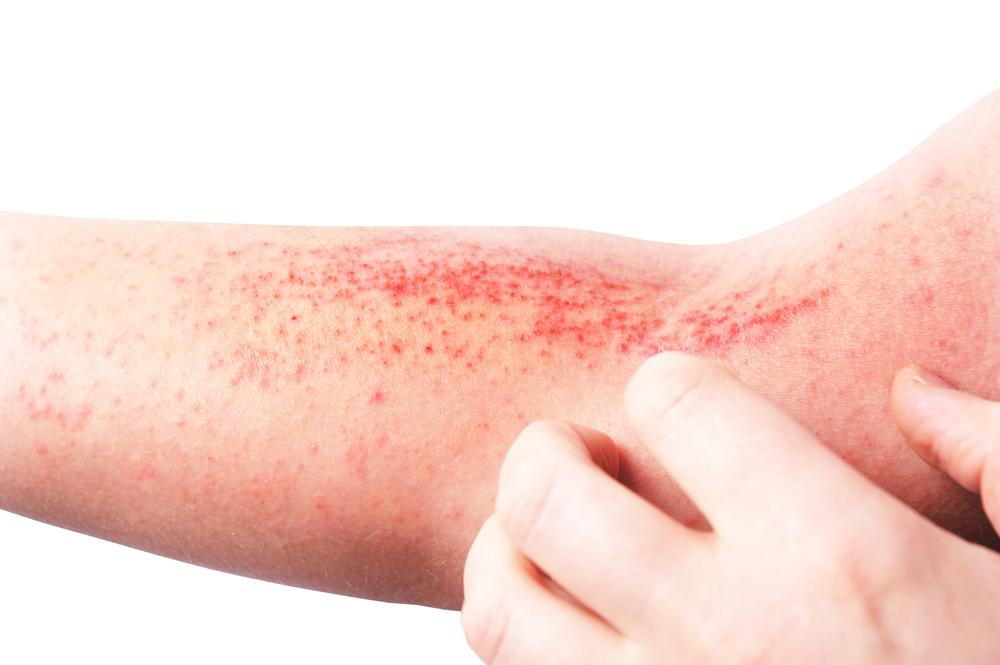
Eczema symptoms commonly include intense itching, dry or scaly skin, inflammation, rough bumps, cracking, and recurring rashes. Scratching may create raw areas, fluid leakage, crusting, skin discoloration, or thick leathery patches. Eczema is a group of conditions rather than one identical rash.
The itch may begin before the rash becomes obvious. That itch-scratch cycle can keep a flare active long after the original irritation started.
What Does an Eczema Flare Look Like?
Atopic dermatitis often produces dry, sensitive skin with an intensely itchy rash. On lighter skin, inflammation may look red or pink. On darker skin, it can appear brown, purple, gray, or darker than the surrounding area. Small rough bumps may be more noticeable than redness.
Scratching can leave lines, swelling, bleeding, or open skin. Repeated rubbing may eventually create thickened patches that itch even when the flare is less active.
| Eczema feature | What you may notice | Possible consequence |
| Dryness | Rough, tight, flaky skin | Cracks and irritation |
| Intense itching | Worse at night | Sleep disruption |
| Inflamed rash | Color varies by skin tone | Burning or tenderness |
| Oozing or crusting | Wet or yellow areas | Possible infection |
A flare-up notes archive can hold dates and photographs, but pictures should be treated as a record rather than a self-diagnosis tool.
Why Does Eczema Itch So Intensely?
The skin barrier does not protect moisture and irritants as effectively in many people with atopic dermatitis. Genes, immune activity, and substances touching the skin may all play a role. The exact combination differs between individuals.
Once itching begins, scratching damages the barrier further. More irritation then produces more itching. This cycle explains why telling someone to “stop scratching” rarely solves the problem.
Nighttime can be especially difficult because there are fewer distractions, warmth builds under bedding, and unconscious scratching may occur during sleep. Short nails and soft clothing may reduce injury, but they do not replace treatment for ongoing inflammation.
Which Triggers Commonly Cause Flare-Ups?
Dry air, sudden temperature changes, overheating, sweat, rough fabrics, fragranced products, harsh cleansers, stress, and skin infections can contribute to flares. Contact dermatitis may be triggered by substances such as nickel, fragrance, preservatives, hair products, or occupational chemicals.
An itch-cycle log can record where the rash appears, products used beforehand, work exposures, weather, sweating, and sleep disruption. Its limitation is that several triggers may overlap, making one item appear responsible when it isn’t.
Avoid removing multiple foods without medical guidance. Food allergy and eczema can coexist, but unnecessary restriction may cause nutritional problems without clearing the skin.
Is Every Itchy Rash Eczema?
No. Fungal infections, psoriasis, scabies, hives, medication reactions, and several forms of contact dermatitis can resemble eczema. Location, border shape, duration, exposure history, and associated symptoms help distinguish them.
Ring-shaped or rapidly expanding rashes deserve assessment rather than repeated moisturizer alone. A rash affecting several household members raises different questions than a recurring patch in one person.
A clinician may diagnose eczema through examination and history. Patch testing may be considered when allergic contact dermatitis is suspected, but it does not identify every possible irritation.
Keep product trial notes when changing cleansers or moisturizers. Introduce one product at a time when possible; otherwise, you may not know which item helped or irritated the skin.
What Skin-Care Steps May Calm Irritation?
Use lukewarm water and a gentle fragrance-free cleanser. Pat rather than rub the skin dry, then apply moisturizer while the skin remains slightly damp. Thick creams or ointments often retain moisture longer than thin lotions, but they can feel greasy and may not suit every body area.
Choose soft, breathable clothing and rinse sweat from the skin when overheating triggers itching. This can reduce irritation, but it won’t control a serious flare by itself.
Prescription treatment may include topical anti-inflammatory medicine or other therapies chosen by a clinician. The face, eyelids, skin folds, and genitals require extra caution because skin thickness and medication absorption differ.
Where Eczema Management Often Goes Wrong
Constantly switching products can make irritation harder to trace. “Natural” does not automatically mean gentle; essential oils and plant extracts can cause allergic reactions.
Another problem is using a strong medicated cream for longer than instructed or applying it to the wrong body area. The opposite error is stopping a prescribed treatment too early because the surface looks better while deeper inflammation remains active.
Scratching open skin and then covering it with untested remedies may trap irritants or delay treatment. Comfort measures help, but infected eczema needs medical attention.
Red Flags: When to Get Medical Help
Seek prompt medical care for yellow or golden crusts, pus, spreading discoloration, increasing warmth, swelling, tenderness, or pain. These can indicate infection.
Immediate care is needed when clusters of painful blisters or punched-out sores appear with fever, fatigue, or swollen lymph nodes. Eczema herpeticum can become serious, especially in babies, children, and immunocompromised people. Seek emergency help for facial swelling, trouble breathing, or a rapidly spreading rash after a medicine or food exposure.
Frequently Asked Questions
Can eczema appear for the first time in adulthood?
Yes. Adults can develop several forms of eczema, including adult-onset atopic dermatitis and contact dermatitis. A new persistent rash should be assessed because other conditions may look similar.
Does eczema always look red?
No. Redness may be less visible on darker skin. Eczema may instead appear purple, gray, brown, darker than nearby skin, or as clusters of rough bumps.
Is eczema contagious?
No. You cannot catch atopic dermatitis from another person. However, infections developing in damaged eczema skin may require precautions or treatment.
Protect the Skin Before the Next Flare Builds
Begin with a simple routine: gentle washing, consistent moisturizing, fewer fragranced products, and a short symptom log. When a rash keeps returning, interrupts sleep, or breaks the skin, get it identified instead of rotating through random creams.
See the AAD overview of atopic dermatitis symptoms for further guidance.
This article provides general education and is not a diagnosis or personalized medical advice.