
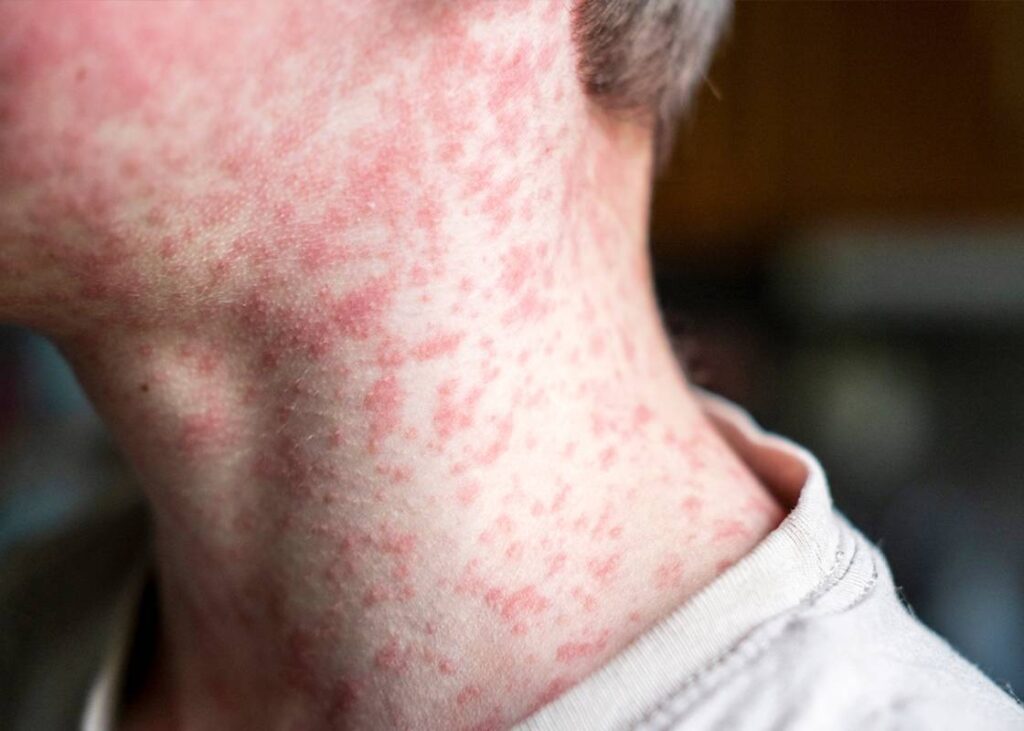
Measles symptoms typically begin with a high fever, cough, runny nose, and red or watery eyes. A spreading rash appears several days later, usually starting around the hairline and moving downward. Suspected measles requires immediate telephone contact with a healthcare provider because it spreads easily and can cause serious complications.
When Do the First Measles Symptoms Appear?
Symptoms generally begin 7 to 14 days after contact with the virus. Fever is often accompanied by cough, coryza—the medical term for a runny nose—and conjunctivitis. The person may look increasingly ill before the rash develops.
The CDC’s measles symptom timeline notes that tiny white Koplik spots may appear inside the mouth two to three days after the first symptoms. They aren’t always noticed without a clinical examination.
Measles shouldn’t be judged by the rash alone. The combination of significant fever, respiratory symptoms, red eyes, exposure history, travel, and vaccination status provides a more meaningful picture.
How Does the Measles Rash Spread?
The rash commonly appears three to five days after the initial symptoms. Flat red spots usually begin on the face near the hairline and then spread to the neck, trunk, arms, legs, and feet. Small raised bumps may appear over the flat areas, and neighboring spots can merge.
| Approximate stage | Common symptoms | Typical development |
| Days 7–14 after exposure | Fever, cough, runny nose, red eyes | First illness signs |
| 2–3 days after symptoms | Possible mouth spots | Koplik spots may appear |
| 3–5 days after symptoms | Spreading red rash | Begins on face and moves downward |
| Following days | Rash fades gradually | Other symptoms may continue |
A low-stimulation resting area may help with light sensitivity and exhaustion, but suspected measles needs professional and public-health guidance rather than home observation alone.
What Should You Do When Measles Is Suspected?
Call the healthcare facility before entering. This allows staff to arrange precautions and reduce exposure to infants, pregnant patients, immunocompromised people, and others in the waiting area.
Write down symptom onset, possible exposure, travel history, and vaccination records. A clear fever and rash log can help clinicians reconstruct the timeline without relying on memory during a stressful call.
Don’t attend school, work, worship services, public transportation, shops, or social gatherings while awaiting instructions. Measles spreads through the air and can remain a risk in shared indoor spaces even after the infected person has left.
Why Is Measles Sometimes Mistaken for Another Rash?
Several viral infections, medicine reactions, and inflammatory conditions can cause fever with a rash. Roseola, rubella, scarlet fever, and some drug reactions may initially seem similar. Diagnosis based only on an online photograph is unreliable.
One dangerous mistake is waiting for the rash before reporting a known exposure. Another is arriving unannounced at an emergency department with a mild-looking rash but a strong measles exposure history.
Good public-health awareness supports safer decisions, yet laboratory testing and local health-department involvement may be required to confirm a case. A healthcare provider will determine the correct next step.
Who Faces a Higher Risk of Complications?
Babies, young children, pregnant people, adults with inadequate immunity, and individuals with weakened immune systems may face greater risks. Complications can include ear infection, diarrhea, pneumonia, brain inflammation, and death.
Dehydration may develop when fever, poor appetite, vomiting, or diarrhea reduces fluid intake. Breathing problems can worsen quickly when pneumonia occurs. Even a previously healthy person can become seriously ill.
Vaccination history is useful but shouldn’t be used to dismiss compatible symptoms after a credible exposure. Breakthrough illness is less common, not impossible.
Red Flags and When to Get Help
Seek urgent medical guidance for difficulty breathing, blue or gray lips, severe weakness, confusion, seizures, stiff neck, inability to wake normally, dehydration, or rapidly worsening fever. Infants, pregnant people, and immunocompromised patients need prompt advice after possible exposure, even before symptoms appear. Call before traveling to any healthcare facility so appropriate infection-control arrangements can be made.
Frequently Asked Questions
Does the measles rash itch?
It may itch, but itching isn’t the defining feature. High fever, cough, runny nose, red eyes, exposure history, and the downward-spreading pattern are more significant clues.
Can measles begin without a rash?
Yes. Fever and respiratory symptoms usually come first. The rash commonly appears several days later, so contagious illness may already be present before spots are visible.
Is measles the same as German measles?
No. German measles is rubella, which is caused by a different virus and is generally milder, although it can be devastating during pregnancy.
Call Before You Leave Home
When fever, cough, red eyes, and a spreading rash fit the measles timeline, stay away from public settings and telephone a healthcare provider immediately. Mention any known exposure or recent travel during the first call. That single step protects vulnerable people and helps you receive the correct testing instructions.
This information is educational and isn’t a substitute for diagnosis or personalized medical care.