
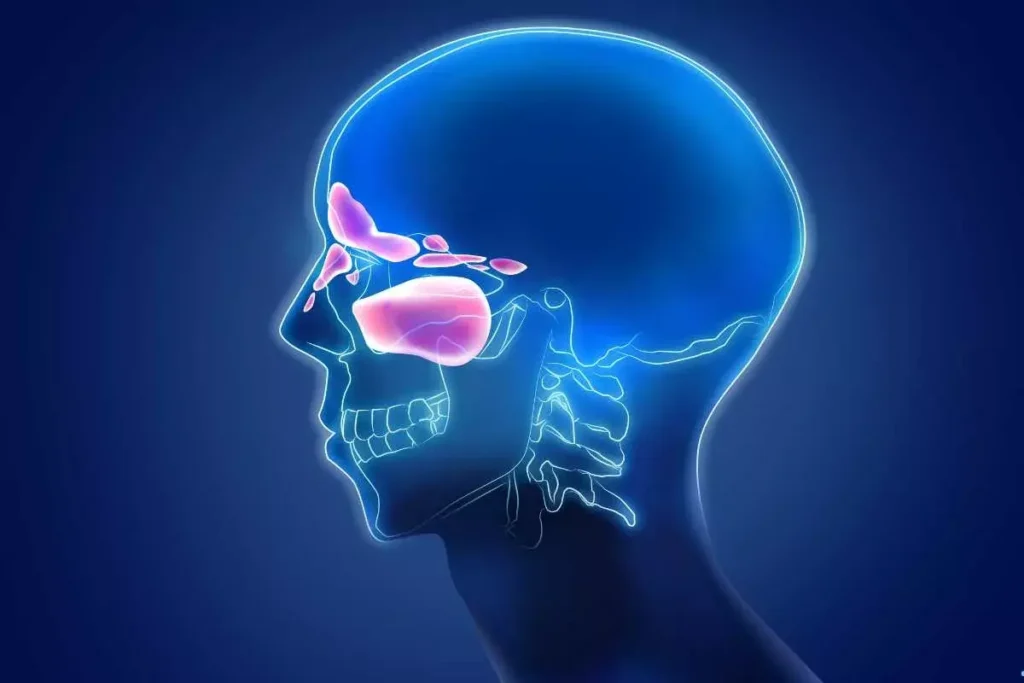
Sinusitis symptoms often include nasal blockage, thick drainage, reduced smell, facial pressure, headache, and discomfort around the cheeks, eyes, nose, or forehead. A viral cold causes many short-term cases, while allergies and other conditions can create similar pressure. Duration and progression matter more than mucus color alone.
What Are the Most Common Sinusitis Symptoms?
Inflamed sinus and nasal tissues can block normal drainage. You may notice congestion, postnasal drip, thick nasal discharge, facial tenderness, reduced smell, cough, bad breath, or pressure that worsens when bending forward.
Pain may be felt in the upper teeth because the roots sit close to the maxillary sinuses. Yet tooth pain can also come from a dental infection, so location alone doesn’t establish the cause.
The CDC sinus infection guide advises medical evaluation for severe or concerning symptoms and notes that other conditions can imitate a sinus infection.
Is Facial Pressure Enough to Confirm Sinusitis?
No. Facial pressure can accompany migraines, tension headaches, allergies, dental problems, jaw disorders, or nasal congestion without a bacterial sinus infection.
| Symptom pattern | Possible explanation | What to watch |
| Pressure with congestion | Viral sinus inflammation | Gradual improvement |
| Itching and sneezing | Allergies | Repeated trigger pattern |
| One painful upper tooth | Dental problem | Gum swelling or chewing pain |
| Severe one-sided headache | Another headache disorder | Neurological symptoms |
Keeping a simple symptom timeline is more useful than repeatedly checking your face for tenderness. Routine plans found through community planning pages may need to wait when pressure, fatigue, and poor sleep are affecting concentration.
When Might a Bacterial Infection Be Considered?
Many sinus infections begin with a virus and improve without antibiotics. Clinicians become more concerned about bacterial sinusitis when symptoms remain persistent without improvement, become severe, or worsen again after initially getting better.
That “better, then worse” pattern is sometimes called double worsening. It may include renewed fever, stronger facial pain, or increased nasal discharge. However, diagnosis still depends on the full clinical picture rather than one symptom.
You may need to postpone activities listed in neighborhood reference guides while monitoring the pattern. The inconvenience is temporary; unnecessary antibiotics can create longer-term problems.
What Helps, and Where Can It Go Wrong?
Rest, fluids, humidified air, and saline nasal rinsing may ease discomfort for some people. The limitation is that supportive measures don’t treat every underlying cause, particularly dental infections, structural blockage, or serious complications.
Use only distilled, sterile, or previously boiled and cooled water for nasal rinsing. Tap water that is safe for drinking isn’t automatically safe for sinus irrigation. Clean and dry the rinsing device after use according to its instructions.
Overusing decongestant nasal sprays can cause rebound congestion. Another mistake is forcing a rinse through a completely blocked or painful passage. Let city resource listings wait if treatment attempts are making the pressure worse.
Why Mucus Color Can Be Misleading
Thick yellow or green discharge doesn’t automatically prove a bacterial infection. Immune cells, dehydration, and the length of time mucus remains in the nasal passages can change its appearance.
The stronger clues are the overall timeline, severity, fever, one-sided swelling, and whether symptoms are improving. I’d pay more attention to a clear change in the illness than to one tissue showing darker mucus.
Chronic symptoms lasting for many weeks require a different evaluation from a short viral illness. Allergies, polyps, anatomical narrowing, medication effects, and chronic inflammation may need consideration.
Red Flags: When Should You Get Medical Help?
Seek urgent care for swelling around an eye, vision changes, severe one-sided facial swelling, confusion, neck stiffness, seizures, an intense or rapidly worsening headache, or difficulty moving an eye. These symptoms may indicate infection spreading beyond the sinuses.
Medical assessment is also appropriate for symptoms that remain persistent, repeatedly return, worsen after improvement, or occur with immune suppression. Infants, frail adults, and people with serious underlying conditions may require earlier evaluation.
Frequently Asked Questions
Can sinusitis make your teeth hurt?
Yes. Maxillary sinus inflammation may cause aching in the upper back teeth. A single painful tooth, gum swelling, or pain when biting may instead point toward a dental problem.
Does bending forward worsen sinus pressure?
It can. Changes in pressure and movement of inflamed tissues may increase discomfort when leaning forward. This sign isn’t specific enough to diagnose sinusitis by itself.
Are sinus headaches always caused by sinus infections?
No. Migraine and other headache disorders are often mistaken for sinus headaches, particularly when they cause facial pressure, watery eyes, or nasal symptoms.
Use the Timeline, Not Pressure Alone
Notice whether symptoms are improving, staying unchanged, or worsening after a brief recovery. That pattern gives a healthcare professional more useful information than mucus color or pain location alone. Seek help promptly for eye symptoms, neurological changes, severe swelling, or rapidly increasing pain.
This article provides general health information and does not replace evaluation or treatment from a qualified healthcare professional.