
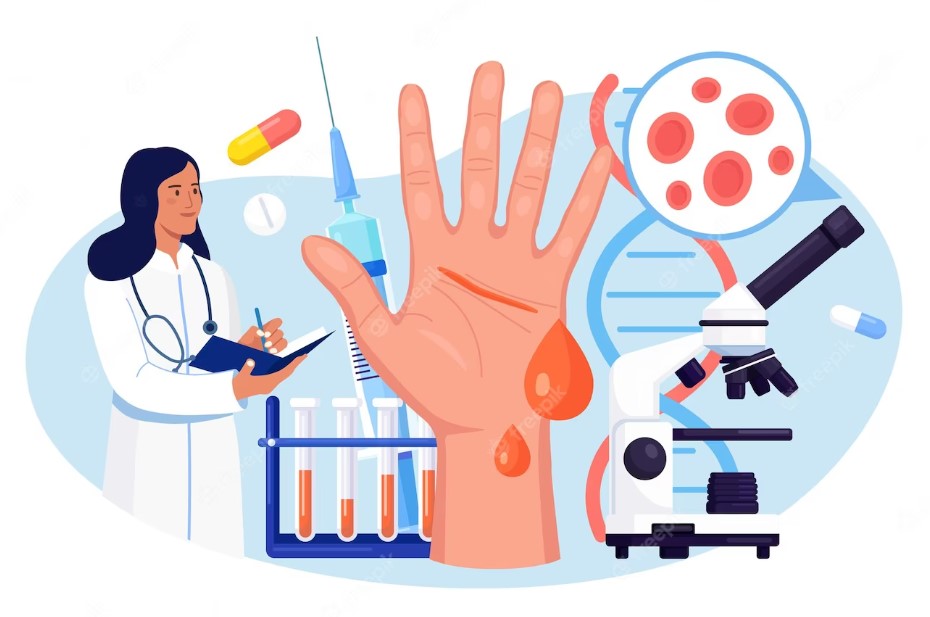
Hemophilia symptoms include prolonged bleeding, frequent large bruises, bleeding after surgery or dental work, and painful swelling caused by bleeding into joints or muscles. Severe hemophilia may also cause spontaneous internal bleeding. Symptoms vary according to how much functioning clotting factor a person has.
What Causes Hemophilia Symptoms?
Hemophilia occurs when the blood has too little of a clotting factor needed to form a stable clot.
Hemophilia A involves factor VIII, while hemophilia B involves factor IX. Both are usually inherited, although acquired bleeding disorders can develop through different mechanisms. The lower the functioning factor level, the more likely spontaneous or severe bleeding becomes.
Small surface cuts are not always the greatest concern. Bleeding inside joints, muscles, the abdomen, throat, or brain can be more dangerous because it may not be immediately visible.
Which Bleeding and Bruising Signs Are Typical?
Common signs include bruises that are large or frequent, bleeding that continues longer than expected, and swelling or pain after relatively minor injuries.
Babies may have prolonged bleeding after circumcision, heel sticks, injections, or loss of the umbilical cord. As children become mobile, parents may notice repeated bruises or swollen joints. Adults with mild hemophilia may not be diagnosed until surgery, dental extraction, or a substantial injury.
| Sign | Possible source | What to do |
| Warm, painful joint | Bleeding into the joint | Contact the treatment team |
| Deep firm swelling | Muscle bleed or hematoma | Get prompt medical advice |
| Prolonged mouth bleeding | Injury or dental procedure | Follow the prescribed plan |
| Headache after a fall | Possible internal bleeding | Seek emergency assessment |
Maintaining bleeding history notes can help identify patterns before appointments. The notes are supportive information, not proof that hemophilia is present.
How Does Bleeding Into a Joint Feel?
Joint bleeding may begin as tingling, tightness, warmth, or discomfort before obvious swelling develops.
The knee, ankle, and elbow are commonly affected. As blood accumulates, the joint may become painful, stiff, swollen, and difficult to move. Repeated bleeding into the same joint can damage cartilage and contribute to long-term mobility problems.
Children may protect an arm, avoid placing weight on one leg, or stop using a joint normally. Not every sore joint is a bleed, but people with diagnosed hemophilia should follow their treatment center’s instructions rather than waiting for severe swelling.
How Is Hemophilia Evaluated?
Clinicians consider the bleeding pattern, family history, examination findings, and blood tests.
A complete blood count can help identify platelet problems or anemia. Clotting tests such as activated partial thromboplastin time may indicate a problem involving certain clotting factors. Specific factor testing is used to identify the type and severity of hemophilia.
Once diagnosed, people often need an individualized plan covering injuries, procedures, exercise, travel, and workplace safety preparation. Preparation reduces confusion during a bleed, although it cannot prevent every injury.
The Centers for Disease Control and Prevention provides an accessible overview of hemophilia causes and symptoms.
Common Mistakes Around Bruising
Assuming every bruise means hemophilia can lead to unnecessary fear. Active children often develop ordinary bruises.
But dismissing unusually large, frequent, raised, or unexplained bruises is also a mistake, especially when they occur with nosebleeds, prolonged bleeding, swollen joints, or a family history of bleeding problems.
Some families rely heavily on protective everyday clothing to reduce minor scrapes. Padding may offer limited protection during selected activities, but excessive restriction can interfere with normal development. Activity choices should be discussed with the hemophilia team.
Red Flags: When to Get Emergency Help
Any significant head injury in someone with hemophilia requires urgent medical guidance, even when the person initially feels well. Call emergency services for a severe or worsening headache, repeated vomiting, confusion, unusual sleepiness, seizure, weakness, speech difficulty, or loss of consciousness.
Emergency assessment is also needed for uncontrolled bleeding, swelling of the neck or throat, breathing difficulty, severe abdominal or back pain, blood in vomit, black stool, or rapidly expanding muscle swelling. Don’t wait for visible bruising when internal bleeding is possible.
Frequently Asked Questions
Can girls and women have hemophilia symptoms?
Yes. Although hemophilia more commonly causes severe disease in males because of its usual inheritance pattern, girls and women can have reduced factor levels and clinically significant bleeding.
Are frequent nosebleeds enough to diagnose hemophilia?
No. Nosebleeds have many possible causes. Diagnosis requires an assessment of the full bleeding history and appropriate clotting-factor tests.
Does hemophilia cause a person to bleed faster?
Not necessarily. The main problem is that a stable clot may not form properly, so bleeding can continue longer or restart after it appears to have stopped.
Create a Written Bleeding Plan
People with diagnosed hemophilia should keep their treatment-center details, diagnosis, factor information, and emergency instructions accessible. Before surgery, dental treatment, or a new sport, discuss the plan with the hemophilia team. Treat possible head, neck, abdominal, or internal bleeding as urgent.
This information is educational and should not replace instructions from a hemophilia treatment center or emergency professional.