
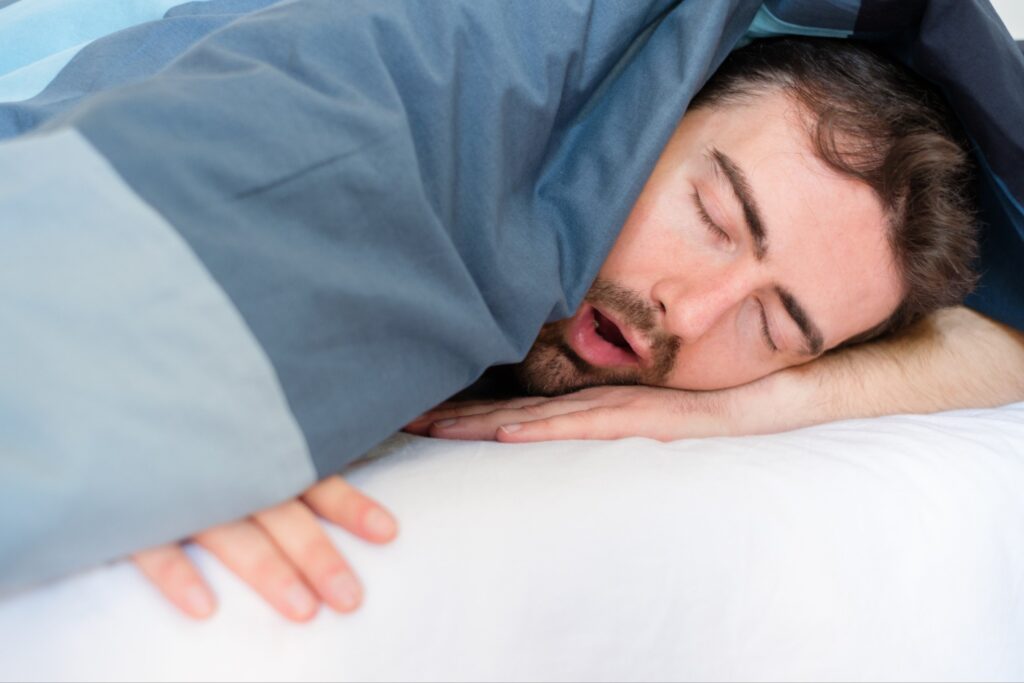
Sleep apnea symptoms can include loud recurring snoring, pauses in breathing, choking or gasping during sleep, morning headaches, dry mouth, daytime tiredness, and poor concentration. The sleeping person may not notice the breathing interruptions, which is why a partner’s observations can be valuable. Snoring alone doesn’t prove sleep apnea, but repeated breathing pauses need evaluation.
What Happens During Sleep Apnea?
Sleep apnea causes breathing to stop and restart repeatedly during sleep. Obstructive sleep apnea occurs when airflow is blocked, while central sleep apnea involves problems with the brain’s breathing signals. Some people experience features of both.
The National Heart, Lung, and Blood Institute advises discussing sleep apnea with a healthcare provider when someone reports snoring, gasping, breathing interruptions, or excessive daytime sleepiness.
These interruptions may cause brief awakenings that the person doesn’t remember. Someone can believe they slept for eight hours while their sleep was repeatedly fragmented.
Nighttime Signs a Partner May Notice
Frequent loud snoring is a familiar warning sign, but the pattern matters more than one isolated sound. Concern rises when snoring is broken by silence, choking, snorting, or a sudden gasp.
| Nighttime observation | What it may look like | Why it matters |
| Loud snoring | Heard through a closed door | May signal narrowed airflow |
| Breathing pauses | Silent gaps followed by gasps | Needs clinical discussion |
| Restless sleep | Repeated movement or waking | Sleep may be fragmented |
| Mouth breathing | Dry mouth on waking | May accompany airway problems |
Not every person with sleep apnea snores, and not every snorer has sleep apnea. That’s one reason a diagnosis cannot be made from sound alone.
Consistent sleep-friendly household habits may make observations easier, but they don’t measure breathing or rule out a sleep disorder.
Why Morning Headaches and Fatigue Occur
Morning headaches can accompany sleep apnea, though they have many other possible causes. Repeated breathing disruption, fragmented sleep, teeth grinding, dehydration, medication effects, or another condition may contribute.
Daytime effects may include sleepiness, slow thinking, irritability, poor memory, reduced attention, and falling asleep during passive activities. Some people describe fatigue rather than obvious sleepiness.
Children may appear hyperactive, irritable, or academically distracted instead of visibly drowsy. Women and older adults may also report less stereotypical symptoms, which can contribute to missed recognition.
Factors That Can Raise Suspicion
Sleep apnea can affect people of different body types and ages. Possible risk factors include upper-airway anatomy, enlarged tonsils or adenoids, family history, age, alcohol or sedative use, and certain medical conditions.
Body weight can influence obstructive sleep apnea risk, but assuming only larger people are affected is a serious mistake. A thin person with a narrow airway, jaw structure difference, or other risk factor may still have the condition.
Some bedroom setup changes may improve comfort or sleep position. Their limitation is simple: changing pillows isn’t a substitute for testing when breathing repeatedly stops.
Mistakes That Delay Diagnosis
The first mistake is treating snoring as a harmless personality trait even when it includes gasping or witnessed pauses. The second is assuming fatigue is caused only by age, work pressure, or poor motivation.
Another error is using a phone recording as a diagnosis. Recordings may help communicate what a partner hears, but they cannot reliably measure airflow, oxygen levels, sleep stages, or the severity of breathing events.
People may also try over-the-counter devices without understanding the cause. Some products are inappropriate for certain users, and poorly fitted devices can create discomfort without addressing the underlying disorder.
How Sleep Apnea Is Tested
A healthcare professional may review symptoms, medications, medical history, airway features, and information from a sleep partner. Testing may occur at home or in a sleep center, depending on the person’s symptoms and clinical situation.
Sleep studies can measure breathing, oxygen levels, heart rate, airflow, movement, and other signals. A normal or unclear home test doesn’t always end the investigation when symptoms remain strongly suggestive.
Anyone searching through nearby health service listings should verify the clinician’s qualifications, the type of testing offered, insurance requirements, and how results will be interpreted.
Treatment depends on the type and severity of sleep apnea. Options may include positive airway pressure therapy, oral appliances, addressing contributing conditions, positional approaches, surgery, or other individualized care. Each has limitations and requires appropriate follow-up.
Red Flags and When to Get Help
Contact a healthcare provider when loud snoring occurs with witnessed breathing pauses, choking, morning headaches, severe daytime sleepiness, or difficulty concentrating. Falling asleep while driving, at work, or during conversations requires prompt attention because it creates immediate safety risks.
Seek emergency care for severe breathing difficulty while awake, chest pain, fainting, sudden weakness, blue or gray discoloration, or another acute medical emergency. Don’t rely on a sleep-tracking device to decide whether urgent symptoms are safe.
Frequently Asked Questions
Can sleep apnea happen without loud snoring?
Yes. Snoring is common in obstructive sleep apnea, but it isn’t universal. Central sleep apnea may present differently, and some people sleep alone without anyone available to notice nighttime sounds.
Are morning headaches always caused by sleep apnea?
No. Morning headaches have many potential causes. They become more suggestive when combined with loud snoring, gasping, witnessed breathing pauses, dry mouth, and persistent daytime sleepiness.
Can a smartwatch diagnose sleep apnea?
Consumer devices may identify patterns worth discussing, but they shouldn’t replace medical assessment or validated sleep testing. Device accuracy and capabilities vary.
Treat the Breathing Pattern as Evidence
Ask a partner to record specific observations such as pauses, gasping, snoring frequency, and daytime sleepiness. Then discuss the pattern with a healthcare professional. Sleep apnea symptoms are easy to normalize because they happen at night, but breathing interruptions and unsafe drowsiness shouldn’t be dismissed.
This article provides general information and does not diagnose or treat sleep apnea.