
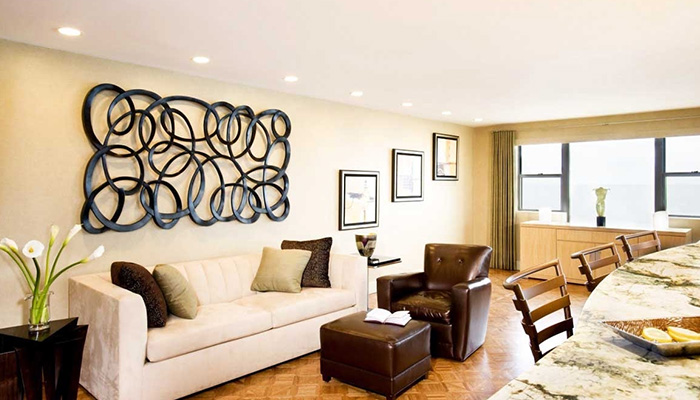
A blank wall can make a finished room feel oddly unfinished, even when the furniture is good and the paint color works. The right wall decor ideas can turn that flat stretch of drywall into the part of the room that finally makes sense. Most American homes have at least one awkward empty wall, whether it is behind a sofa, beside a dining table, over a bed, or along a hallway that feels more like a pass-through than part of the home.
The mistake many people make is treating wall decor like decoration added at the end. That is why rooms start to feel random. A framed print here, a shelf there, one mirror bought on sale, and suddenly the wall has objects but no point of view. Better rooms start with intention. A wall should support how the room feels, how people move through it, and what the space is trying to say.
For homeowners browsing home design inspiration, the best starting point is simple: do not fill every inch. Give the wall a role, then choose pieces that serve that role with confidence.
Building a Wall That Matches the Room’s Real Purpose
A wall should not compete with the room. It should make the room easier to understand. That sounds simple, but it is where many plain rooms go wrong. A living room wall needs a different kind of energy than a bedroom wall, and a dining room wall should not feel like a copied gallery from a coffee shop. The purpose of the room decides the mood of the wall before the first frame goes up.
Reading the Room Before Buying Anything
Good wall styling starts before shopping. Stand in the doorway and look at what the room already gives you. Notice the main furniture, the natural light, the ceiling height, the flooring tone, and the blank wall’s size. A wide wall behind a sectional sofa needs weight and structure. A narrow wall near a reading chair may only need one strong piece with breathing room around it.
This step saves money because it stops impulse buying. Many people buy small pieces because they feel safe, then scatter them across a large wall and wonder why the room still looks unfinished. Scale matters more than the price tag. One large framed artwork can look calmer and more expensive than six small pieces that never quite connect.
A real example is the wall behind a sofa in a suburban family room. If the sofa is 84 inches wide, one tiny 16-inch print above it will look lost. A better choice might be a large canvas, a pair of matching frames, or a grid that spans about two-thirds of the sofa width. The wall then feels tied to the furniture instead of floating above it.
The counterintuitive part is that less decor can make the room feel fuller. Empty space around a strong piece gives the eye a place to rest. Crowding the wall often makes the room feel smaller, not warmer.
Choosing a Mood Instead of a Theme
A theme can get stiff fast. Beach signs, farmhouse words, city skylines, or matching quote prints often make a room feel staged instead of lived in. A mood works better because it gives you direction without trapping you. Calm, warm, collected, polished, playful, earthy, and bold are moods. They leave room for personality.
For a bedroom, calm might mean soft abstract art, fabric wall hangings, muted photography, or a single oversized framed piece above the headboard. For a home office, focused might mean black-and-white prints, a cork inspiration board, a framed map, or a clean shelf with books and one sculptural object. The goal is not to impress a guest for ten seconds. The goal is to make the room feel right every day.
American homes often blend styles because families collect things over time. That is not a flaw. A framed national park print from a road trip, a vintage mirror from a local flea market, and modern picture lights can work together when the mood is clear. The pieces do not need to match. They need to speak the same language.
The most honest walls have some evidence of real life. A room with nothing but store-bought matching art can look clean, yet it often feels thin. Add one piece with a story, and the wall gains a pulse.
Modern Wall Decor Ideas That Add Shape, Texture, and Depth
Flat walls need more than flat objects. This is where modern wall decor ideas become more interesting than framed prints alone. Shape, texture, and shadow can change how a plain room feels, especially in newer homes where walls, trim, and layouts often look clean but bland. The goal is not to make the wall busy. The goal is to give it dimension.
Using Texture When Color Feels Too Loud
Texture is a quiet way to add interest without making a room feel loud. Woven wall baskets, wood slat panels, plaster-style art, framed textiles, grasscloth wallpaper, and ceramic wall pieces can all create depth while keeping the palette calm. This works well in apartments, townhomes, and newer builds where white or greige walls dominate.
A dining nook, for example, can change fast with a set of shallow woven baskets arranged in an uneven cluster. The look feels warm, but it does not demand a major color commitment. In a bedroom, a linen textile above the bed can soften the wall more naturally than a glossy print. In a hallway, shallow wood rails with framed art can create a custom look without a full renovation.
Texture also helps when the room already has enough color in rugs, pillows, or upholstery. Adding more color to the wall may push the room into visual noise. A natural fiber piece or tone-on-tone relief art gives the wall something to say without starting an argument with everything else.
The surprise is that texture often photographs better than bright color. Shadows give the wall movement throughout the day. Morning light, afternoon shade, and evening lamps all make textured pieces feel slightly different.
Making Mirrors Work Harder Than Decoration
A mirror is not only a shiny rectangle on the wall. Used well, it changes light, balance, and perceived space. That matters in smaller American homes, city apartments, and older houses with narrow rooms. A mirror across from a window can pull daylight deeper into the room. A tall mirror near an entry can add function while making the space feel less boxed in.
Placement decides whether a mirror helps or hurts. A mirror that reflects clutter doubles the problem. A mirror that reflects a window, artwork, greenery, or a clean architectural line makes the room feel better. Before hanging one, check what it catches from normal standing and sitting heights. The reflection is part of the decor.
Round mirrors soften rooms with too many straight edges. Rectangular mirrors work well above console tables, fireplaces, and dressers. Arched mirrors add a gentle architectural note, especially in plain rooms without built-in character. The frame matters too. Thin black frames feel crisp. Wood frames feel warmer. Brass or aged metal frames can bring a quiet touch of polish.
A smart move is treating a mirror like a window, not a filler piece. Give it enough size to matter. A small mirror on a large wall often looks timid, while a properly scaled mirror can make the whole room breathe.
Creating Personal Walls Without Making Them Messy
Personal decor can make a room feel warm or chaotic. The difference is editing. Family photos, travel memories, kid artwork, records, postcards, sports memorabilia, and handmade pieces all belong in a home, but they need structure. Personal walls work best when the layout is disciplined and the contents are human.
Designing a Gallery Wall That Feels Collected
A gallery wall should not look like a pack of frames exploded across the drywall. It needs a visual rule. That rule may be matching frames, a shared color palette, equal spacing, similar matting, or one strong center line. Once the rule is clear, the individual pieces can vary without the wall falling apart.
For a living room, a gallery wall above a console can mix family photos, small landscapes, a line drawing, and one personal memento. Keep the frames within a tight color range, such as black, walnut, or white oak. Use paper templates before hammering nails. This sounds fussy, but it prevents the common problem of frames creeping too high, too far apart, or too close to the furniture.
Gallery walls work well in staircases because they can follow movement. They also shine in hallways, where people naturally slow down and look closer. A hallway wall can hold a family’s story better than the main living room, where too many small images may fight with the television, fireplace, or sofa.
The unexpected trick is to include one quiet piece. Not every frame should shout. A simple landscape, a blank-heavy sketch, or a muted textile sample can give the eye a pause between more personal images. That pause makes the memories easier to enjoy.
Displaying Collections Like a Grown-Up
Collections are risky because they can slip from charming to cluttered. The answer is not hiding them. The answer is choosing a display method that makes the collection look intentional. Vinyl records, small ceramics, vintage plates, hats, guitars, cameras, or framed sports tickets can all become strong wall decor when grouped with care.
A music lover might mount a few favorite album covers in square frames above a media cabinet. A baseball fan could frame ticket stubs, a small pennant, and one black-and-white stadium photo instead of covering the room with loose memorabilia. A traveler could frame maps from three meaningful trips rather than hanging every souvenir collected over ten years.
The best collections leave something out. Editing is not rejection. It is respect for the pieces that matter most. When everything goes on the wall, nothing gets attention. When five pieces make the cut, each one gains weight.
Wall shelves can help, but they should not become storage. Use shelves for objects that cast interesting shadows or add shape, not piles of things that needed a place to land. A shelf with two books, a small ceramic piece, and one framed photo often says more than a shelf packed from edge to edge.
Using Color, Lighting, and Layout to Finish the Wall
Decor alone cannot rescue poor placement. A good wall depends on color relationships, lighting, and layout as much as the objects themselves. This is where plain rooms start to feel designed rather than decorated. The pieces may be affordable, but the choices feel careful.
Letting Wall Color Do Part of the Work
Paint can be wall decor when used with restraint. An accent wall still works, but only when it has a reason. Painting the wall behind a bed, built-in shelves, or a dining banquette can anchor the room. Painting one random wall because it was empty often feels like a shortcut.
Soft contrast usually lasts longer than harsh contrast. Warm white trim against a clay wall, sage behind natural wood, charcoal behind pale bedding, or navy behind brass sconces can all create a grounded backdrop. The wall decor then has support. It does not have to carry the whole room by itself.
Renters can use removable wallpaper, peel-and-stick panels, or large fabric panels to get a similar effect. A powder room may handle a bold pattern better than a living room because the time spent there is short. A small hallway might look richer with vertical stripes or subtle texture. Scale and exposure matter.
Here is the part people miss: the wall behind the decor affects the decor’s value. A $40 print can look better on a well-chosen paint color than a $400 print on a wall that fights it. Background is not background. It is part of the composition.
Adding Light So the Wall Feels Intentional at Night
A wall that looks good only during daylight is half-finished. Lamps, picture lights, sconces, and even warm LED strips can give wall decor presence after sunset. This matters in American homes where family rooms and bedrooms are often used most in the evening.
Picture lights above framed art add a classic touch, but they should fit the frame width and room style. Plug-in sconces work well for renters or anyone avoiding electrical work. A floor lamp angled toward a textured wall can create shadows that make the surface feel richer. Even a table lamp beneath a mirror can double the glow in a room.
Lighting also helps separate a decorated wall from a cluttered wall. When light hits a chosen focal point, the eye understands what matters. Without light, several objects may blur together after dark, especially on darker paint colors.
The practical move is to test the room at night before calling the wall finished. Turn on the lamps you normally use. Sit where you usually sit. Notice whether the wall feels warm, dull, harsh, or invisible. A small lighting change can fix what another piece of decor cannot.
Conclusion
A plain wall is not a problem to cover as fast as possible. It is a chance to give the room a clearer voice. The smartest homes do not treat every empty surface as wasted space. They choose where the eye should land, where the room should breathe, and where personality deserves a place.
That is why wall decor ideas work best when they start with the room instead of the store. Measure the furniture. Notice the light. Pick a mood. Use texture when color feels heavy, use mirrors where reflection helps, and give personal pieces enough structure to feel proud instead of scattered. The result does not have to look expensive. It has to look decided.
Start with one wall that bothers you most, then make one confident choice instead of ten nervous ones. A room changes when the wall finally knows what it is there to do.
Frequently Asked Questions
What are the best wall decor ideas for a small living room?
Choose fewer pieces with stronger scale. One large artwork, a round mirror, or a tight two-frame set usually works better than many small items. Keep colors close to the room palette, and avoid bulky wall shelves that make the space feel narrower.
How do I decorate a plain wall without spending much money?
Use framed printable art, thrifted mirrors, fabric remnants, family photos, or simple wood ledges. Paint can also change the wall at low cost. The key is scale and placement, not price. Cheap pieces look better when they are hung with confidence.
What should I put on a wall behind a sofa?
A large canvas, pair of framed prints, structured gallery wall, mirror, or long picture ledge can work well. Aim for decor that spans about two-thirds of the sofa width. Hang it close enough to feel connected, not floating near the ceiling.
How can I make wall decor look modern but still warm?
Mix clean lines with natural texture. Try simple frames, woven pieces, wood tones, soft abstract art, or warm metal accents. Modern rooms feel cold when every surface is slick, so add one tactile element to soften the look.
Are gallery walls still popular in modern homes?
Gallery walls still work when they feel edited. Matching frames, shared colors, steady spacing, or one clear layout rule keeps them current. Random frame clusters can feel dated, but collected walls with personal meaning still bring character to a home.
What wall decor works best in bedrooms?
Bedrooms usually need calm pieces that support rest. Soft art, textile hangings, muted photography, mirrors with warm frames, or a simple piece above the headboard all work well. Avoid loud visual clutter near the bed if you want the room to feel restful.
How high should wall decor be hung?
Most wall decor should hang near eye level, with the center around 57 to 60 inches from the floor. Above furniture, keep the bottom of the piece roughly 6 to 10 inches above the furniture so the wall and furniture feel connected.
How do I decorate a large empty wall without clutter?
Start with one anchor piece, then decide whether the wall needs support around it. Large art, a mirror, panel molding, shelves, or a controlled gallery layout can fill space cleanly. Leave some open wall visible so the design feels calm, not crowded.